The map
Every listed strata building, on one map
Every building in the directory is placed on this map. Select a marker to see the headline numbers, then open the full building file.
The directory
All 121 buildings
Every strata building in Kitsilano with a home currently listed for sale. Search by street, building name or strata plan, then open any building for its full file.
No buildings match that search. Try a street name, a building name or a strata plan number.
Kitsilano past
A shore with a long memory
Long before it was a neighbourhood, this shore was home. The lands and waters around what is now Kitsilano are the traditional territory of the Musqueam, Squamish and Tsleil Waututh Nations, whose villages and camps stood along these beaches for thousands of years. The name Kitsilano itself comes from Khatsahlano, a Squamish chief whose people lived at the village of Senakw near the south end of what is now the Burrard Bridge.
The modern neighbourhood took shape in the 1880s, when the Canadian Pacific Railway received a large land grant on the south shore of English Bay and the area was surveyed into building lots. When the streetcar line reached Kitsilano in the early 1900s, houses and apartment blocks followed, and the shore became a favourite summer escape, with bathhouses, dance halls and crowds arriving by tram on sunny weekends.
Kitsilano Pool opened in 1931 and remains one of the longest outdoor salt water pools in the country, drawing swimmers all summer long. In the 1960s, Vanier Park was created from former military land at the east end of the neighbourhood, bringing the museum, the planetarium and the open festival lawns that still anchor Kits Point.
That same decade made Kitsilano the heart of the counterculture in Vancouver, a district of communal houses, coffee houses and young people drawn by low rents and the beach. Many of the character houses from that era still line the side streets today.
Through the 1970s and 1980s, older houses and small rental blocks gave way to the low rise strata buildings that now define much of Kitsilano. Strata ownership had arrived in British Columbia in the 1960s, and the neighbourhood filled with three and four storey wood frame buildings, garden townhomes and a small number of concrete towers along the shore. Many of the buildings in our directory date from that long building wave, and the newest arrivals, built in the 2020s, are still joining it.
Kitsilano present
The market and the neighbourhood today
As of November 10, 2026, 147 homes in 121 strata buildings are listed for sale in Kitsilano, with a combined asking value of about 174.5 million dollars and a median asking price of 899,999 dollars. The full building by building picture lives in the directory above, and it refreshes every week.
Daily life still runs on the water. Kitsilano Beach, the seawall path and the string of parks along the shore tie the neighbourhood together, and Jericho Beach waits a short walk to the west. Vanier Park hosts Bard on the Beach each summer and holds the museum and planetarium above the inlet.
West 4th Avenue is the main street, a long run of shops, cafes, grocers and restaurants that serves the whole district. West Broadway forms a second commercial spine along the south edge, with the shops and services of a busy city corridor. Between the two, the side streets stay quiet, leafy and mostly low rise, which is exactly the balance most people come to Kitsilano looking for.
Kitsilano future
Plans that will shape the next Kitsilano
The Broadway Plan, adopted by the City of Vancouver in 2022, sets the direction for growth along the Broadway corridor over the coming thirty years, with taller buildings and more homes near transit. The Broadway subway extension of the Millennium Line is under construction and is planned to reach Arbutus Street, at the edge of Kitsilano, in its first phase.
At the south end of the Burrard Bridge, the Squamish Nation is building Senakw, a large rental housing community on its reserve lands beside Vanier Park. Planned in phases over the coming years, it will bring thousands of homes and the tallest towers in this part of the city, on land the Nation has held since long before the neighbourhood around it existed.
To the west, the Jericho Lands, the former garrison lands near Jericho Beach, are moving through a long planning process led by a partnership of the Musqueam, Squamish and Tsleil Waututh Nations together with Canada Lands Company. The work points toward a new complete neighbourhood there over the coming decades.
Each of these is a plan in progress. Final forms and timelines can change, and this page will follow them as decisions are made and construction moves.
For the live files, project by project, with the source documents linked, see the Developments section below.
What the documents say
Listings give the price. Documents give the building.
We read the fullest strata document packages attached to current Kitsilano listings, word for word: information certificates, bylaws, depreciation reports, meeting minutes, financial statements and insurance summaries. Eleven buildings had real packages beyond a bare strata plan. Here is what stood out.
Pulse, on Maple Street: the levy that stalled
Pulse is a concrete strata built in 2009, with 74 homes and 6 commercial units. In September 2024 its owners passed a building envelope levy of 1,083,306 dollars to replace the parkade waterproofing membrane, repaint the exterior and renew sealants. The money was collected. Then the project stalled. Tendering was cancelled in March 2025, the project engineer was dismissed that June, and by November 2025 the levy fund still held about 1,089,752 dollars with under 19,000 dollars spent during the year. Meanwhile the depreciation report in the same package says the parkade membrane has worn through and water is reaching the reinforcing steel inside the concrete. The building is also in a tribunal dispute with its developer over 60,000 dollars, its legal spending ran far beyond its budget, and strata fees rose 0 percent in both 2024 and 2025.
Arbutus Place, on West 2nd Avenue: the wall ahead
Arbutus Place is a wood frame building from 1977 with 43 homes. Its draft depreciation report, dated September 2026, finds the current contingency contribution too small for what is coming. Most of its walls are original face sealed stucco near the end of its expected service life, and the report budgets about 910,035 dollars to replace that cladding with rainscreen in 2032. If contributions stay flat, the report models special levies of about 1,013,428 dollars in 2032 and 842,276 dollars in 2033, roughly 47,000 dollars combined for the listed home, unit 206. Fees at Arbutus Place were left unchanged in both 2025 and 2026. The minutes also record a tribunal dispute the strata never explains, and a history of recurring leaks, including one into the parking stall of the very unit now listed for sale.
Lessons that repeat across buildings
Water is the money risk. Every readable insurance summary in the set carries a water damage deductible between 25,000 and 50,000 dollars, and strata bylaws commonly charge that deductible to the owner whose home caused the claim. One failed appliance hose or burst pipe can become a five figure bill for a single owner.
Flat fees feel kind and cost later. The two buildings with the biggest documented bills both held fees flat while known work approached. A low monthly fee is only good news when the contingency fund is keeping pace with the building.
Some packages tell you nothing. Four of the eleven fullest seller packages could not be read at all, because bylaws or forms were scanned images with no usable text, or the file labelled as strata documents turned out to be only the filed strata plan. For those buildings, a buyer learns nothing from the listing and needs a proper document order.
Earthquake deductibles are large. In the readable packages they run from 10 percent of building value to a stated 268,613 dollars in a strata of only two homes at 3428 West 7th Avenue.
We keep reading every full package that appears in Kitsilano listings, and this page updates as new documents land.
Developments
What is being built, approved and proposed
The 28 current development files in and around Kitsilano, drawn from City of Vancouver application pages, project partnership sites and industry listings. Every entry links to its source, and the figures shown are the figures the source states. Select any project for its full file, or find it on the map above in warm orange.
About this data
How this hub is built
The building data on this page is compiled from documents attached to MLS listings in Kitsilano, including strata plans, information certificates, bylaws, rules, depreciation reports, meeting minutes, financial statements and insurance summaries. The set is refreshed weekly. Figures reflect asking prices and listing documents as of the date shown at the top of this page, and they can change as listings change.
Where a fact is not yet documented for a building, this site says so plainly rather than guessing.
Presented by Mike Dirks, REALTOR, REAL Broker BC.
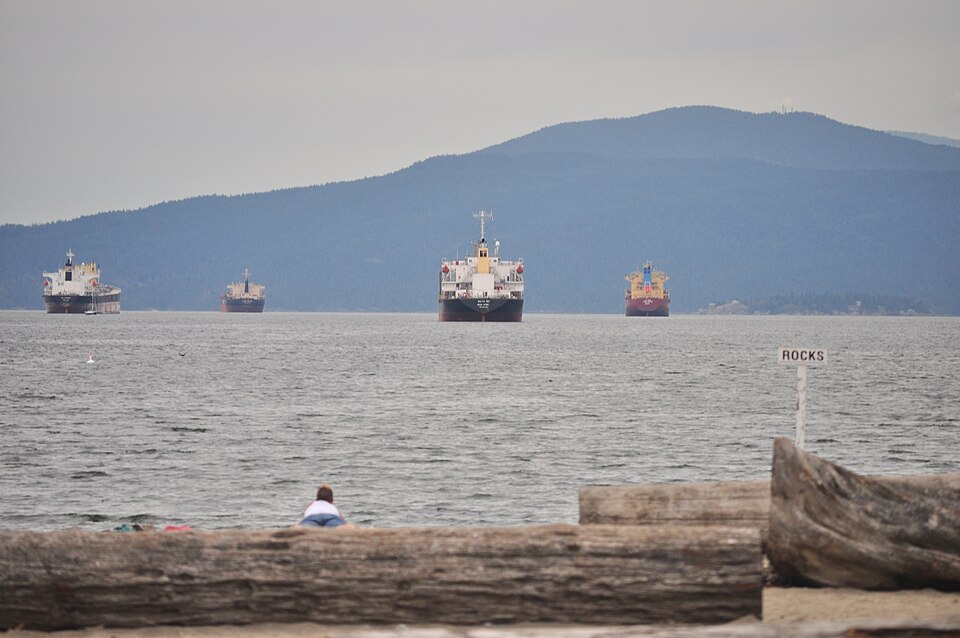
Hero photo of Kitsilano Beach by Joe Mabel, via Wikimedia Commons, shared under the Creative Commons CC BY SA 3.0 licence. Map data from OpenStreetMap contributors.